Tuesday, 21 June 2011

Traveling Despite Asthma and Allergies


Healthy TipsTraveling can expose you to New Triggers for Allergies and Asthma, but planning ahead can help you Breathe a bit easier while you're away.
The Asthma & Immunologist offers Travel suggestions:
  • Pack your asthma and allergy meds in carry-on bags, and keep them in their original containers.
  • Continue to take your medications on schedule as directed by your doctor.
  • Prepare for potential problems, such as food allergies.
  • Keep contact information for your allergist and an emergency contact handy.
  • If possible, find an allergist at your travel destination.
Related Sites: Pharmacyproductinfo, Pharmacy News.


    Tuesday, 14 June 2011

    Avoid Back Pain While Travelling in a Car

    HealthnfitnessTips: Traveling long distances in a car can take a Toll on your back. Here is some useful tips to prevent you from the car while Driving or Traveling for a long distances.

    Tips to how keep Back Pain at Bay during a Car Travel:
    • Adjust your seat so you're sitting comfortably close to the wheel, with your knees just higher than your hips.

    • Use a back support.

    • Take Regular Breaks to rest.

    • Stretch your toes, leg muscles and shoulders as you drive.

    • Keep hands on the Steering Wheel at the 3:00 and 7:00 positions, alternating occasionally with the 10:00 and 2:00 positions.

    • Keep a Relaxed Grip on the wheel, occasionally tightening, then loosening, your hold.

    Thursday, 9 June 2011

    Identify the Signs of Food Allergy Tips


    Food allergy reactions range from mild to life-threatening, depending on the person.

    Some common warning signs of a Milder Allergic Reaction to food may include:
    • A Tight feeling in the throat, or a hoarse voice.
    • Coughing and Wheezing.
    • Nausea, vomiting or stomach pain.
    • Diarrhea.
    • Hives or Skin Rash.
    • A Tingling sensation on the lips or tongue.
    • Runny nose.
    In more serious cases, food allergy may cause a severe reaction called Anaphylaxis, which may cause a person's breathing pathways to narrow, blood pressure to drop, and tongue to swell. This should be treated as a life-threatening medical emergency.

    Wednesday, 1 June 2011

    Useful Tips for Summer Vacation


    With Summer Vacation approaching, parents need to know how to get their children outside and active, instead of spending too much time in front of the Television, computer or video games. Children should get 60 minutes or more of physical activity a day.


    Tips for Limiting TV and hopeful active fun:
    • First, parents need to assess the amount of screen time (TV, Internet, DVD's, video games) they and their children are getting and set limits for everyone in the family. Turn the TV off during mealtime and give all your family members an opportunity to talk about their day.
    • Don't use screen time to reward or punish children because that makes it seem more important than it is. Use praise, encouragement and recognition for children's physical activity.
    • One positive way to use TV is to watch DVDs or videos that feature activities such as dancing, tae kwon do or yoga. When children are watching their favorite shows, encourage them to exercise (i.e. pushups, jumping jacks or crunches) during commercials.
    • Help your children find healthy alternatives to screen time. For example, take them to the park, play outside with them, or help them learn a new sport.
    • Don't allow TVs or computers in children's bedrooms. Kids with TVs in their bedrooms watch as much as 1 1/2 hours more TV than other children.

    Thursday, 26 May 2011

    Examine 1 in 7 Strokes Happens During Sleep

    About 14 percent of strokes happen while people are sleeping, lowering the chance that they'll be able to get to the hospital in time for a potentially brain-saving treatment. Because the only treatment for ischemic stroke must be given within a few hours after the first symptoms begin, people who wake up with stroke symptoms often can't receive the treatment since we can't determine when the symptoms started. Imaging studies are being conducted now to help us develop better methods to identify which people are most likely to benefit from the treatment, even if symptoms started during the night.
    Patients who suffered from ischemic strokes in a one-year period and were treated at emergency rooms in the Cincinnati area, Ischemic stroke is caused by blocked blood flow in the brain, usually because of a clot. In 14 percent of the cases, people woke up with symptoms of a stroke. Nationwide, that would account for 58,000 people who visit emergency rooms with stroke systems annually. People should not wait for any new neurological deficits in the morning to pass or go away as they become less groggy; they should seek medical attention immediately.

    According to the National Stroke Association, symptoms of a stroke include:
    • Sudden paralysis or weakness in the face or limbs, especially on one side of the body
    • Sudden problems with balance or walking
    • Sudden vision problems
    • Slurred speech
    • Sudden confusion or problems speaking or understanding simple statements
    • Sudden severe headache with no apparent cause
    Stroke experts offer a simple way to help people remember what to look for if they think they are witnessing a stroke: Think FAST (Face, Arms, Speech, Time):
    • Face: See if the person is able to smile, or if one side of their face seems to droop.
    • Arms: Can the person raise both arms, or does one side drift downward?
    • Speech: See if the person is able to speak clearly or repeat a simple phrase.
    • Time: Call 9-1-1 immediately if the person exhibits any of these signs.
    Even though tPA may not be an option in wake-up strokes, there are many other treatments that can be given in an emergency room or hospital.
     

    Tuesday, 17 May 2011

    Health Tips to Spot caution Signs of Low Blood Sugar


    Hypoglycemia is the medical term for low blood glucose, common among people with diabetes. It can occur even when you're trying hard to manage your blood sugar levels.

    The Diabetes Association says while you can't always prevent hypoglycemia, you can take steps to treat it if you know the warning signs:
    • Sweating or turning pale.
    • Feeling dizzy or shaking.
    • Developing a headache.
    • Feeling hungry.
    • Showing moodiness, or rapid behavior changes.
    • Moving awkwardly or clumsily.
    • Having a seizure.
    • Acting confused, or having problems paying attention.
    • Having a tingly feeling around the mouth.

    Tuesday, 10 May 2011

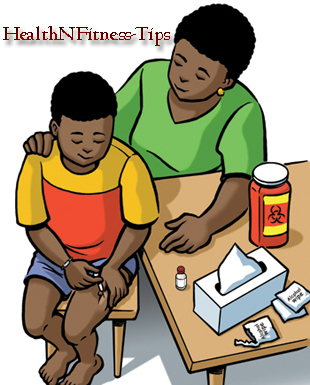
    Health Tips to prepare Diabetic Child for Insulin Shots

    For a child with diabetes, blood glucose checks or insulin shots can be major sources of anxiety, especially at the beginning. Parents and caregivers may be no less fearful and guilt-stricken.


    The health Association suggests how to help you and your child get through blood sugar checks and insulin shots:
    • Practice taking deep breaths, and letting them out slowly.
    • Tell your child a joke, or sing a favorite song during the shot.
    • Allow your child to play doctor and pretend to give you a shot first.
    • Ask your child to tell you about the favorite part of the day.
    • Prep the injection site with a kiss, and give another one when the shot is over.
    • Give the shot as quickly as possible.
    • Offer your child plenty of praise for being brave.